🏠 Home
Global Economy
🌐
Global Economy
12 channels · 1,225 articles
Articles
Bubbles or Regime-Switching in Gold and Bitcoin?
I don’t have the answer, but the two series do make quite a picture (all in logs since five years ago):
Figure 1: Log difference from 6/29/2021 in bitcoin (green, left scale), in gold (blue, right scale). Source: TradingEconomics.com.
On equities, note the Nasdaq is down, while the SP500 is below peak, but not yet falling drastically.
Figure 2: Log difference from 6/29/2021 in Nasdaq (green), in SP500 (blue). Source: TradingEconomics.com.
For economists, a bubble occurs when the price d
0
3
Last-mile AI: Pointed at the wrong problems
Most last-mile AI investments go to routing but the areas that drive costs and CSAT are untouched.
0
2
Monday assorted links
1. The great Scott Wheeler on Stephen Sondheim (Free Press).
2. Is space the most underrated policy area?
3. On the USAID and deaths debate. Hardly the final word, but an injection of sanity into what has been a low quality debate. Here is commentary from GPT Pro. In a few years we might have some accurate estimates.
4. Using LLMs in economic history.
5. Measuring economic growth through the valuation of human life.
6. Brooklyn Coffee Shop showcases my book The Complacent Class.
The post Mond
0
1
Where Will the Jobs Come From in Developing Economies?
Where do jobs come from? The economic answer is relatively straightforward. Employers provide a desired good or service, and they hire workers with the range of skills they need to provide that good or service. But from a worker point of view, the answer looks much less straightforward. How do I find these employers who are hiring? In particular, where are the employers who want my skills and are willing to pay the compensation I would like to receive for those skills? If the employer wants some
0
2
Alternative Business Cycle Indicators: Coincident, Consensus ADP
Coincident continues to rise through May, while Bloomberg consensus for NFP growth is for +114K, roughly same growth rate as in May:
Figure 1: Civilian employment adjusted to NFP concept smoothed population controls (bold orange), manufacturing production (red), ADP private nonfarm payroll employment (light green), Bloomberg consensus of 6/29 (light green +), real retail sales, CPI deflated (black), freight services indexes (brown), and coincident index in Ch.2017$ (pink), GDO (blue bars), all
0
2
Strategy’s last-ditch strategy
It’s going to be a stretch (sorry)
0
3
AI cheating on math econ at Brown
The temptation to use artificial intelligence (AI) to cheat is shaking up elite universities in the United States. Professor Roberto Serrano, who is the Harrison S. Kravis University Professor of Economics at Brown University, has detected a massive fraud in one of the classes he teaches, ECON 1170, an advanced undergraduate course in mathematical economics. He has conclusive evidence that at least 50 students cheated on the March midterm exam, making it the biggest known scandal at Brown and in
0
3
‘The risk of a deleveraging event is rising’
Morgan Stanley’s analysts are worried about quarter-end money tightness
0
3
Del Monte faces about $40M headwind from primarily ocean freight
Tensions in the Middle East are driving higher energy, shipping and commodity costs, which are expected to materialize in Q2, CFO Monica Vicente said.
0
3
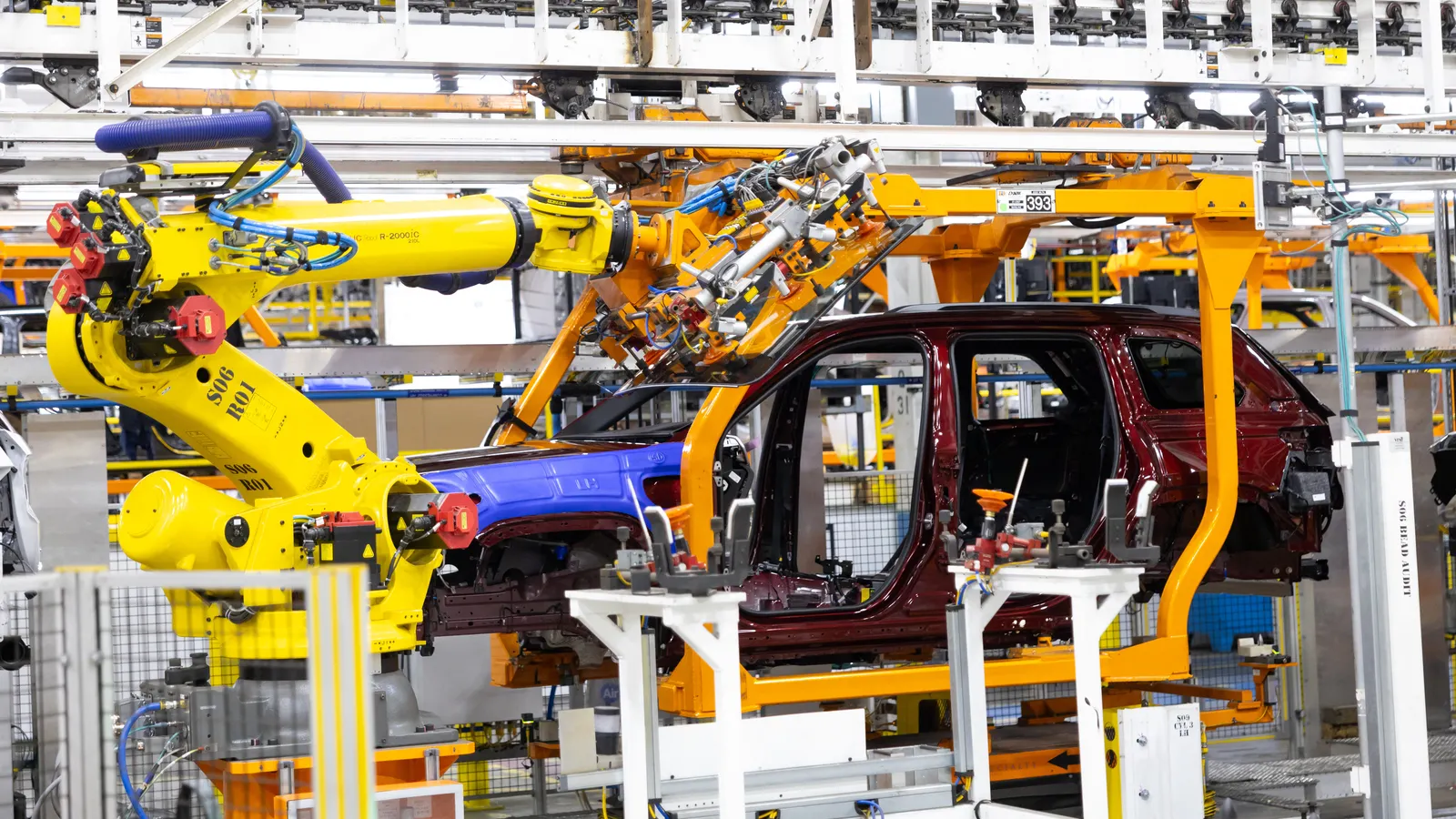
Toyota North America adjusts supply chain, manufacturing leadership
Changes include expanded roles for Group VP of Supply Chain Kevin Austin and Group VP of Vehicle Supply Chain Kensuke Morita.
0
2
Majors Management taps AI tool for pricing, inventory and operations
Convenience retailers are still dipping their toes into AI, but technology is quickly becoming a mainstay as c-stores look to smoothen their operations.
0
3
CBP readies more stringent data requirements for postal imports
A new rule could result in more than $100 million in additional duties per year, although the agency said it may deter some import activity.
0
0
Politically Incorrect Paper of the Day: The US Racial Wealth Gap
Writing in the QJE, Derenoncourt, Kim, Kuhn, & Schularick argue that today’s black-white wealth gap can be explained by differences in initial conditions from over a hundred and fifty years ago, i.e. slavery. But there is an important, and glaring objection: in the age of immigration (1850–1924) millions of whites immigrated to the United States with essentially no wealth and yet they caught up to the “heritage” whites quite quickly and indeed today are richer than heritage
0
3
Will future biomedical advances be low marginal cost?
Most pharmaceuticals involve high upfront costs, to discover and test the drug, and very low marginal costs. Another pill can be printed almost for free.
That cost structure favors health systems, such as that of Britain, that try to pay lower for services. They can end up getting a relatively good deal from price discrimination. After all, they can be served at low marginal cost, at least for those ttreatments.
Now imagine a biomedical future where many more treatments are based on the seque
0
0
Typewriters and fertility
Workplace technological changes were instrumental in creating new tasks for women over the last century. This paper studies the adoption of the typewriter into US workplaces. Exploiting exogenous variation in typist demand across sectors, I document that the typewriter increased women’s labor force participation, leading to lower rates of marriage and fertility. These developments stemmed from a transition of White women from households into office work and an indirect crowding-in effect drawing
0
0
Artificial intelligence and Engels’ Pause
Politics could be a bigger constraint than power and compute
0
0
FTAV’s further reading
Vermeer; Western Asset; Lincoln v cotton; digital services taxes; perps; Andy Burnham; and Treasury exposures
0
0
Brent More Contango-ey
As of NYMEX open:
This has occurred as the chances of a near term reopening have declined.
Notes: August 1 (orange), September (blue), October (green). Source: Kalshi, accessed 6/28/2026, 5:15PM CT.
0
0
Rate Cycles (Where Are We Now?)
I’ve been remiss in reporting on this important work by Kristin Forbes, Jongrim Ha and Ayhan Kose, documenting periods of monetary policy tightening ad loosening, and characteristics of those episodes. From the paper:
Source: Forbes, Ha and Kose (ungated version, 2024).
The methodology of identifying the cycles will look familiar to those familiar with business cycle dating. The chronology is here:
Source: Forbes, Ha and Kose (ungated version, 2024).
From the abstract:
We analyse cycles
0
0
Bubbles or Regime-Switching in Gold and Bitcoin?
I don’t have the answer, but the two series do make quite a picture (all in logs since five years ago):
Figure 1
0
3
Last-mile AI: Pointed at the wrong problems
Most last-mile AI investments go to routing but the areas that drive costs and CSAT are untouched.
0
2
Monday assorted links
1. The great Scott Wheeler on Stephen Sondheim (Free Press).
2. Is space the most underrated policy area?
3. On the USAI
0
1
Where Will the Jobs Come From in Developing Economies?
Where do jobs come from? The economic answer is relatively straightforward. Employers provide a desired good or service,
0
2
Alternative Business Cycle Indicators: Coincident, Consensus ADP
Coincident continues to rise through May, while Bloomberg consensus for NFP growth is for +114K, roughly same growth rat
0
2
Strategy’s last-ditch strategy
It’s going to be a stretch (sorry)
0
3
AI cheating on math econ at Brown
The temptation to use artificial intelligence (AI) to cheat is shaking up elite universities in the United States. Profe
0
3
‘The risk of a deleveraging event is rising’
Morgan Stanley’s analysts are worried about quarter-end money tightness
0
3
Del Monte faces about $40M headwind from primarily ocean freight
Tensions in the Middle East are driving higher energy, shipping and commodity costs, which are expected to materialize i
0
3
Toyota North America adjusts supply chain, manufacturing leadership
Changes include expanded roles for Group VP of Supply Chain Kevin Austin and Group VP of Vehicle Supply Chain Kensuke Mo
0
2
Majors Management taps AI tool for pricing, inventory and operations
Convenience retailers are still dipping their toes into AI, but technology is quickly becoming a mainstay as c-stores lo
0
3
CBP readies more stringent data requirements for postal imports
A new rule could result in more than $100 million in additional duties per year, although the agency said it may deter s
0
0
Politically Incorrect Paper of the Day: The US Racial Wealth Gap
Writing in the QJE, Derenoncourt, Kim, Kuhn, & Schularick argue that today’s black-white wealth gap can be exp
0
3
And the FTAV charts quiz winner is . . .
Charteaubriand
0
0
Will future biomedical advances be low marginal cost?
Most pharmaceuticals involve high upfront costs, to discover and test the drug, and very low marginal costs. Another pi
0
0
Typewriters and fertility
Workplace technological changes were instrumental in creating new tasks for women over the last century. This paper stud
0
0
Artificial intelligence and Engels’ Pause
Politics could be a bigger constraint than power and compute
0
0
FTAV’s further reading
Vermeer; Western Asset; Lincoln v cotton; digital services taxes; perps; Andy Burnham; and Treasury exposures
0
0
Bubbles or Regime-Switching in Gold and Bitcoin?
I don’t have the answer, but the two series do make quite a picture (all in logs since five years ago):
Figure 1: Log diff…
💬 0
👁 3
Last-mile AI: Pointed at the wrong problems
Supply Chain Dive - Latest News · Jun 29, 2026
💬 0
👁 2
Monday assorted links
Marginal REVOLUTION · Jun 29, 2026
💬 0
👁 1
Where Will the Jobs Come From in Developing Economies?
Conversable Economist · Jun 29, 2026
💬 0
👁 2

Alternative Business Cycle Indicators: Coincident, Consensus ADP
Econbrowser · Jun 29, 2026
Strategy’s last-ditch strategy
Alphaville · Jun 29, 2026
AI cheating on math econ at Brown
Marginal REVOLUTION · Jun 29, 2026
‘The risk of a deleveraging event is rising’
Alphaville · Jun 29, 2026
Del Monte faces about $40M headwind from primarily ocean freight
Tensions in the Middle East are driving higher energy, shipping and commodity costs, which are expected to materialize in Q2, CFO …
💬 0
👁 3
Toyota North America adjusts supply chain, manufacturing leadership
Supply Chain Dive - Latest News · Jun 29, 2026
💬 0
👁 2
Majors Management taps AI tool for pricing, inventory and operations
Supply Chain Dive - Latest News · Jun 29, 2026
💬 0
👁 3
CBP readies more stringent data requirements for postal imports
Supply Chain Dive - Latest News · Jun 29, 2026
💬 0
👁 0
Politically Incorrect Paper of the Day: The US Racial Wealth Gap
Marginal REVOLUTION · Jun 29, 2026
And the FTAV charts quiz winner is . . .
Alphaville · Jun 29, 2026
Will future biomedical advances be low marginal cost?
Marginal REVOLUTION · Jun 29, 2026
Typewriters and fertility
Marginal REVOLUTION · Jun 29, 2026
Artificial intelligence and Engels’ Pause
Politics could be a bigger constraint than power and compute…
💬 0
👁 0
Bubbles or Regime-Switching in Gold and Bitcoin?
I don’t have the answer, but the two series do make quite a picture (all in logs since five years ago):
Figure 1: Log difference from 6/29/2021 in bitcoin (green, left scale), in gold (blue, right scale). Source: TradingEconomics.com.
On equities, note the Nasdaq is down, while the SP500 is below peak, but not yet falling drastically.
Figure 2: Log difference from 6/29/2021 in Nasdaq (green), in SP500 (blue). Source: TradingEconomics.com.
For economists, a bubble occurs when the price d
0
3 👁
Last-mile AI: Pointed at the wrong problems
Most last-mile AI investments go to routing but the areas that drive costs and CSAT are untouched.
0
2 👁
Monday assorted links
1. The great Scott Wheeler on Stephen Sondheim (Free Press).
2. Is space the most underrated policy area?
3. On the USAID and deaths debate. Hardly the final word, but an injection of sanity into what has been a low quality debate. Here is commentary from GPT Pro. In a few years we might have some accurate estimates.
4. Using LLMs in economic history.
5. Measuring economic growth through the valuation of human life.
6. Brooklyn Coffee Shop showcases my book The Complacent Class.
The post Mond
0
1 👁
Where Will the Jobs Come From in Developing Economies?
Where do jobs come from? The economic answer is relatively straightforward. Employers provide a desired good or service, and they hire workers with the range of skills they need to provide that good or service. But from a worker point of view, the answer looks much less straightforward. How do I find these employers who are hiring? In particular, where are the employers who want my skills and are willing to pay the compensation I would like to receive for those skills? If the employer wants some
0
2 👁
Alternative Business Cycle Indicators: Coincident, Consensus ADP
Coincident continues to rise through May, while Bloomberg consensus for NFP growth is for +114K, roughly same growth rate as in May:
Figure 1: Civilian employment adjusted to NFP concept smoothed population controls (bold orange), manufacturing production (red), ADP private nonfarm payroll employment (light green), Bloomberg consensus of 6/29 (light green +), real retail sales, CPI deflated (black), freight services indexes (brown), and coincident index in Ch.2017$ (pink), GDO (blue bars), all
0
2 👁
AI cheating on math econ at Brown
The temptation to use artificial intelligence (AI) to cheat is shaking up elite universities in the United States. Professor Roberto Serrano, who is the Harrison S. Kravis University Professor of Economics at Brown University, has detected a massive fraud in one of the classes he teaches, ECON 1170, an advanced undergraduate course in mathematical economics. He has conclusive evidence that at least 50 students cheated on the March midterm exam, making it the biggest known scandal at Brown and in
0
3 👁
‘The risk of a deleveraging event is rising’
Morgan Stanley’s analysts are worried about quarter-end money tightness
0
3 👁
Del Monte faces about $40M headwind from primarily ocean freight
Tensions in the Middle East are driving higher energy, shipping and commodity costs, which are expected to materialize in Q2, CFO Monica Vicente said.
0
3 👁
Toyota North America adjusts supply chain, manufacturing leadership
Changes include expanded roles for Group VP of Supply Chain Kevin Austin and Group VP of Vehicle Supply Chain Kensuke Morita.
0
2 👁
Majors Management taps AI tool for pricing, inventory and operations
Convenience retailers are still dipping their toes into AI, but technology is quickly becoming a mainstay as c-stores look to smoothen their operations.
0
3 👁
CBP readies more stringent data requirements for postal imports
A new rule could result in more than $100 million in additional duties per year, although the agency said it may deter some import activity.
0
0 👁
Politically Incorrect Paper of the Day: The US Racial Wealth Gap
Writing in the QJE, Derenoncourt, Kim, Kuhn, & Schularick argue that today’s black-white wealth gap can be explained by differences in initial conditions from over a hundred and fifty years ago, i.e. slavery. But there is an important, and glaring objection: in the age of immigration (1850–1924) millions of whites immigrated to the United States with essentially no wealth and yet they caught up to the “heritage” whites quite quickly and indeed today are richer than heritage
0
3 👁
Will future biomedical advances be low marginal cost?
Most pharmaceuticals involve high upfront costs, to discover and test the drug, and very low marginal costs. Another pill can be printed almost for free.
That cost structure favors health systems, such as that of Britain, that try to pay lower for services. They can end up getting a relatively good deal from price discrimination. After all, they can be served at low marginal cost, at least for those ttreatments.
Now imagine a biomedical future where many more treatments are based on the seque
0
0 👁
Typewriters and fertility
Workplace technological changes were instrumental in creating new tasks for women over the last century. This paper studies the adoption of the typewriter into US workplaces. Exploiting exogenous variation in typist demand across sectors, I document that the typewriter increased women’s labor force participation, leading to lower rates of marriage and fertility. These developments stemmed from a transition of White women from households into office work and an indirect crowding-in effect drawing
0
0 👁
Artificial intelligence and Engels’ Pause
Politics could be a bigger constraint than power and compute
0
0 👁
FTAV’s further reading
Vermeer; Western Asset; Lincoln v cotton; digital services taxes; perps; Andy Burnham; and Treasury exposures
0
0 👁
Brent More Contango-ey
As of NYMEX open:
This has occurred as the chances of a near term reopening have declined.
Notes: August 1 (orange), September (blue), October (green). Source: Kalshi, accessed 6/28/2026, 5:15PM CT.
0
0 👁
Rate Cycles (Where Are We Now?)
I’ve been remiss in reporting on this important work by Kristin Forbes, Jongrim Ha and Ayhan Kose, documenting periods of monetary policy tightening ad loosening, and characteristics of those episodes. From the paper:
Source: Forbes, Ha and Kose (ungated version, 2024).
The methodology of identifying the cycles will look familiar to those familiar with business cycle dating. The chronology is here:
Source: Forbes, Ha and Kose (ungated version, 2024).
From the abstract:
We analyse cycles
0
0 👁