Big Think science
Latest Articles
A visual history of the universe that fits on your wall
Every few months, I round up useless or unused objects in my house, walk to the alley, and plop them into the dumpster without a second thought. I am no collector or hoarder. I only really value a few physical possessions: my three guitars, my books and magazines, and a small collection of posters and art (my favorite being a painting of a stork whose eyes stare right through you, made by my late grandpa).
That last category is something I could use much more of: beautiful things to look at. One
0
0
A new scale for spotting UFO reports worth investigating
Unidentified Aerial Phenomena (or UAPs, formerly known as UFOs) are back in the news, with the U.S. Defense Department’s recent publication of (mostly old) case files, and the release of Steven Spielberg’s new film Disclosure Day on June 12. It’s unlikely that either will move us any closer to unraveling the mystery of UAPs. What might help, though, is a method for determining which of the thousands of sightings reported every year are truly worth investigating.
Toward that end, we have proposed
0
0
Can 1,000 people have a meaningful conversation? AI may make it possible.
In the modern world, the sheer scale of human organizations has become overwhelming. The average Fortune 1000 company employs more than 30,000 people, with functional teams often numbering in the hundreds. Government and defense organizations are even larger. Yet, despite the common refrain that an organization’s most valuable asset is the intelligence and creativity of its people, we currently lack the ability to enable teams of even a dozen people to hold thoughtful, productive conversations.
0
0
Your brain built a reality bubble. Literature, science, and philosophy can pop it.
Neuroscientist David Eagleman, PhD and physicist Sean Carroll, PhD challenge two assumptions we’re only beginning to question: that our reality is the reality, and that physics leaves no room for free will. Eagleman explains how genetics, brain wiring, and experience shape each person’s inner world. Carroll argues that even in a lawful universe, incomplete knowledge, counterfactual reasoning, and responsibility make our choices matter.
We created this video for Brain Briefs, a Big Think intervie
0
0
Move over, giant meteor. Here’s what the largest comet would do to Earth
Out there, in the farthest recesses of the Solar System, a great existential threat lies in wait: the Oort cloud. Formed at the same time as the protostar that would become our Sun and the protoplanetary disk that would give rise to the planets, asteroids, and moons, it largely consists of the remnants of that same primitive material. Whatever wasn’t either boiled off by the Sun or locked up into the planetary, lunar, asteroidal, or Kuiper belt objects we have today persisted in a series of obje
0
0
Do parents know best? 3 experiments that tried to replace moms and dads
On the second day, we were told we could go home.
We stuffed our snacks, blankets, wet wipes, and nappies into whatever bags we could, and we shuffled back to the car. There he was — a newborn baby in a Winnie-the-Pooh onesie and a cute cap, strapped into a car seat that made him look like a Lilliputian. I’ve never driven home so carefully or slowly as that night. I’m sorry to anyone stuck behind me.
I thought then, and I still think now, how mad it is that, at least in British society, we just
0
0
The literary invention that places you in the chaos of war
For more than a century now, writers have attempted to put into words what it was like to serve in the trenches of the First World War: the chaos, the horror, the futility. Ernest Hemingway famously said that “the only true writing that came through during the war was in poetry,” which conveyed metaphorically what could not yet be put into prose.
After the war, his novel A Farewell to Arms (1929) and other classics such as Erich Maria Remarque’s All Quiet on the Western Front (1929) and Ford Mad
0
0
10 big questions about the search for life beyond Earth
In our quest to understand what’s out there in the Universe, one cosmic unknown looms larger than all the rest: are there other examples of life, complex life, intelligent life, and technologically advanced life out there beyond planet Earth? And if there are other examples out there, a slew of follow-up questions seem inevitable.
How common, uncommon, or rare are those types of life?
Are there other technologically advanced, or even spacefaring, civilizations out there, perhaps even within our
0
0
Before emancipation, a pivotal moment started to dismantle slavery in the U.S.
Every war has its share of turning points, a decisive battle here, a far-reaching order there, a pivotal moment or event that has an outsized influence on the shape of things to come. One such turning point occurred in the early days of the American Civil War, when three enslaved men escaped from bondage and presented themselves before the Union lines outside of Fortress Monroe, Virginia.
The commander of that federal stronghold, Gen. Benjamin F. Butler, took them in on May 24, 1861; provided f
0
0
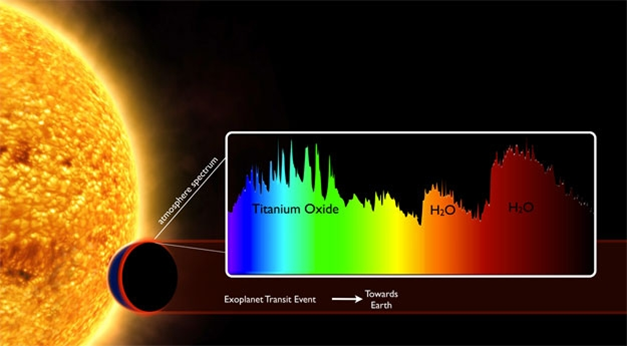
From the smallest to the biggest objects in space
Fully comprehending our Universe requires imagining extraordinarily different scales.
A region of space devoid of matter in our galaxy reveals the Universe beyond, where every point visible here is a distant galaxy. The cluster/void structure can be seen very clearly, demonstrating that our Universe is not of exactly uniform density on all scales. While there are many galaxy-rich regions, galaxy-poor or even galaxy-free regions are also abundant, like holes within a cosmic Swiss cheese. Withi
0
0
Starts With A Bang podcast #130 – the initial mass function of stars
One of the most foundational questions we know how to ask in astronomy is simply this: given a cloud of gas of a given mass, what types of stars will form? How many stars of a given mass will you wind up with, and what factors does that depend on? The answer to this question, if we can give an answer, is known as the “initial mass function,” and is generally very difficult to measure except in the most nearby of places: within our own Milky Way.
It’s possible that every time we form stars,
0
2
How AI is quietly changing what we think the human mind is
In the summer of 2009, Anil Seth spent an unforgettable week with about a dozen Octopus vulgaris, the common octopus. At biologist Graziano Fiorito’s lab, set in a dank basement beneath a public aquarium in the heart of Naples, he watched these astonishing creatures change shape, color, and texture almost like living weather. He watched what they were paying attention to — the way they gathered to stare intently at his colleague’s work, apparently trying to understand what was happening “for no
0
2
Body language expert: 7 cues that make you instantly more likable
You only have a few seconds to make a first impression, and the non-verbal cues you’re sending may be silently working against any kindness your words communicate. Charisma is learned, not innate, and even if you consider yourself an “awkward” person, you can still hack positive reception.
Body language expert Vanessa Van Edwards shares a genius formula to create a lasting first impression while debunking body-language myths and the mistakes you’re probably making in social situations.
This vi
0
0
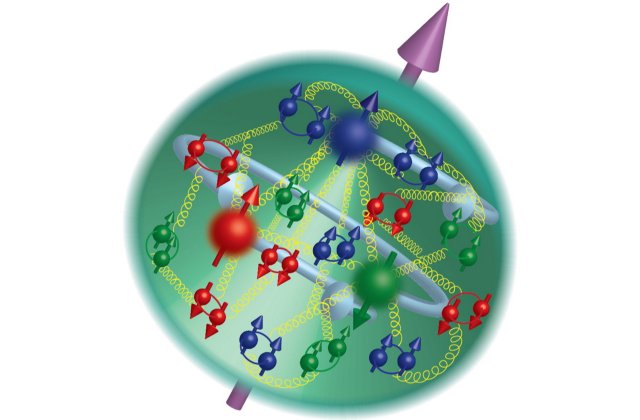
Ask Ethan: How did we discover substructure inside the proton?
It might seem hard to believe, but the picture that most of us were initially taught — that protons and neutrons represented everything that made up the atomic nucleus — was one of the shortest-lived ideas in all of physics history. The proton was only discovered in 1917, by Ernest Rutherford: the same scientist who discovered the existence of the atomic nucleus itself. The neutron, meanwhile, was discovered in 1932 by James Chadwick, providing a massive, neutral counterpart to the proton. As mo
0
0
The 3-part habit loop your brain is running 40 percent of the time
About 40% of everything you do today is a habit your brain automated, and the neural loop driving it doesn’t distinguish between good and bad habits.
Charles Duhigg, author of The Power of Habit and Supercommunicators, explains why trying to eliminate a bad habit is neurologically futile and why the habit that scares you most irrationally is probably the one change that rewires everything else.
This video The 3-part habit loop your brain is running 40 percent of the time is featured on Big Thin
0
0
The overlooked brain system shaping our motivations
I first met Eduardo during my last year of neurology residency, in our aging and memory clinic. He was 56 years old and in robust physical health, having been an avid cyclist for much of his life. But he had a bookish side, too: He was an enthusiastic reader of history and led an informal book club that met monthly at his apartment. As a Dominican American, he was particularly interested in Latin American history and the New York City diaspora, and he often enlivened club meetings with his other
0
0
3 reasons why holidays aren’t making you more relaxed
It doesn’t take Jack Nicholson tap, tap, tapping away in an empty hotel to tell you that rest is important to our well-being. Physiologically, humans need to rest and sleep. When we don’t, we lose some of our ability to concentrate, calculate, remember, and even perceive the world accurately. Our muscles cannot repair, our energy stores deplete, and our hearts beat faster.
On a psychological level, things aren’t much better. When we feel we’re always on — working too long and working too hard —
0
0
The trick that offloads intrusive thoughts so your brain can actually work
We treat focus as something you’re either engaging in, or opting out of, but what if the truth points to focus as being something you’ve been trained out of by our attention economy?
David Epstein, author of Range and Inside the Box, breaks down what’s actually happening inside the brain when we multitask, and why “just focusing” is a solution that doesn’t hold up to reality.
This video The trick that offloads intrusive thoughts so your brain can actually work is featured on Big Think.
0
0
The chemical reason love makes you irrational
Why does love make rational people obsessive? Meghan Sullivan, PhD, Helen Fisher, PhD, Gail Saltz, PhD, and Ted Fischer, PhD, trace love through the brain systems that shape reward, stress, attachment, and desire. But chemistry is only the beginning. Love may also be a moral practice: a way to pay attention, challenge bias, and ask what it really means to care.
We created this video for Brain Briefs, a Big Think interview series created in partnership with Unlikely Collaborators. As a creative n
0
0
Singularities inside black holes are truly unavoidable
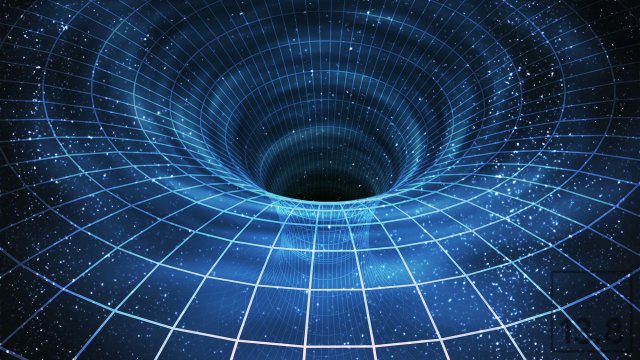
It’s easy to think about the idea of a singularity — where a large amount of matter and energy gets compressed into a single spacetime point or event — and dismiss it as a pathology. After all, everything that we know of in physics, at a fundamental level, comes in quantized little bits: particles and antiparticles with a fixed, finite amount of energy inherent to each of them. No matter what tricks you use, there are certain quantum properties that are always conserved and can never be created
0
4
A visual history of the universe that fits on your wall
Every few months, I round up useless or unused objects in my house, walk to the alley, and plop them into the dumpster w
0
0
A new scale for spotting UFO reports worth investigating
Unidentified Aerial Phenomena (or UAPs, formerly known as UFOs) are back in the news, with the U.S. Defense Department’s
0
0
Can 1,000 people have a meaningful conversation? AI may make it possible.
In the modern world, the sheer scale of human organizations has become overwhelming. The average Fortune 1000 company em
0
0
Your brain built a reality bubble. Literature, science, and philosophy can pop it.
Neuroscientist David Eagleman, PhD and physicist Sean Carroll, PhD challenge two assumptions we’re only beginning to que
0
0
Move over, giant meteor. Here’s what the largest comet would do to Earth
Out there, in the farthest recesses of the Solar System, a great existential threat lies in wait: the Oort cloud. Formed
0
0
Do parents know best? 3 experiments that tried to replace moms and dads
On the second day, we were told we could go home.
We stuffed our snacks, blankets, wet wipes, and nappies into whatever
0
0
The literary invention that places you in the chaos of war
For more than a century now, writers have attempted to put into words what it was like to serve in the trenches of the F
0
0
10 big questions about the search for life beyond Earth
In our quest to understand what’s out there in the Universe, one cosmic unknown looms larger than all the rest: are ther
0
0
Before emancipation, a pivotal moment started to dismantle slavery in the U.S.
Every war has its share of turning points, a decisive battle here, a far-reaching order there, a pivotal moment or event
0
0
From the smallest to the biggest objects in space
Fully comprehending our Universe requires imagining extraordinarily different scales.
A region of space devoid of mat
0
0
Starts With A Bang podcast #130 – the initial mass function of stars
One of the most foundational questions we know how to ask in astronomy is simply this: given a cloud of gas of a given m
0
2
How AI is quietly changing what we think the human mind is
In the summer of 2009, Anil Seth spent an unforgettable week with about a dozen Octopus vulgaris, the common octopus. At
0
2
Body language expert: 7 cues that make you instantly more likable
You only have a few seconds to make a first impression, and the non-verbal cues you’re sending may be silently working a
0
0
Ask Ethan: How did we discover substructure inside the proton?
It might seem hard to believe, but the picture that most of us were initially taught — that protons and neutrons represe
0
0
The 3-part habit loop your brain is running 40 percent of the time
About 40% of everything you do today is a habit your brain automated, and the neural loop driving it doesn’t distinguish
0
0
The overlooked brain system shaping our motivations
I first met Eduardo during my last year of neurology residency, in our aging and memory clinic. He was 56 years old and
0
0
3 reasons why holidays aren’t making you more relaxed
It doesn’t take Jack Nicholson tap, tap, tapping away in an empty hotel to tell you that rest is important to our well-b
0
0
The trick that offloads intrusive thoughts so your brain can actually work
We treat focus as something you’re either engaging in, or opting out of, but what if the truth points to focus as being
0
0
A visual history of the universe that fits on your wall
Every few months, I round up useless or unused objects in my house, walk to the alley, and plop them into the dumpster without a second thought. I am no collector or hoarder. I only really value a few physical possessions: my three guitars, my books and magazines, and a small collection of posters and art (my favorite being a painting of a stork whose eyes stare right through you, made by my late grandpa).
That last category is something I could use much more of: beautiful things to look at. One
0
0 👁
A new scale for spotting UFO reports worth investigating
Unidentified Aerial Phenomena (or UAPs, formerly known as UFOs) are back in the news, with the U.S. Defense Department’s recent publication of (mostly old) case files, and the release of Steven Spielberg’s new film Disclosure Day on June 12. It’s unlikely that either will move us any closer to unraveling the mystery of UAPs. What might help, though, is a method for determining which of the thousands of sightings reported every year are truly worth investigating.
Toward that end, we have proposed
0
0 👁
Can 1,000 people have a meaningful conversation? AI may make it possible.
In the modern world, the sheer scale of human organizations has become overwhelming. The average Fortune 1000 company employs more than 30,000 people, with functional teams often numbering in the hundreds. Government and defense organizations are even larger. Yet, despite the common refrain that an organization’s most valuable asset is the intelligence and creativity of its people, we currently lack the ability to enable teams of even a dozen people to hold thoughtful, productive conversations.
0
0 👁
Your brain built a reality bubble. Literature, science, and philosophy can pop it.
Neuroscientist David Eagleman, PhD and physicist Sean Carroll, PhD challenge two assumptions we’re only beginning to question: that our reality is the reality, and that physics leaves no room for free will. Eagleman explains how genetics, brain wiring, and experience shape each person’s inner world. Carroll argues that even in a lawful universe, incomplete knowledge, counterfactual reasoning, and responsibility make our choices matter.
We created this video for Brain Briefs, a Big Think intervie
0
0 👁
Move over, giant meteor. Here’s what the largest comet would do to Earth
Out there, in the farthest recesses of the Solar System, a great existential threat lies in wait: the Oort cloud. Formed at the same time as the protostar that would become our Sun and the protoplanetary disk that would give rise to the planets, asteroids, and moons, it largely consists of the remnants of that same primitive material. Whatever wasn’t either boiled off by the Sun or locked up into the planetary, lunar, asteroidal, or Kuiper belt objects we have today persisted in a series of obje
0
0 👁
Do parents know best? 3 experiments that tried to replace moms and dads
On the second day, we were told we could go home.
We stuffed our snacks, blankets, wet wipes, and nappies into whatever bags we could, and we shuffled back to the car. There he was — a newborn baby in a Winnie-the-Pooh onesie and a cute cap, strapped into a car seat that made him look like a Lilliputian. I’ve never driven home so carefully or slowly as that night. I’m sorry to anyone stuck behind me.
I thought then, and I still think now, how mad it is that, at least in British society, we just
0
0 👁
The literary invention that places you in the chaos of war
For more than a century now, writers have attempted to put into words what it was like to serve in the trenches of the First World War: the chaos, the horror, the futility. Ernest Hemingway famously said that “the only true writing that came through during the war was in poetry,” which conveyed metaphorically what could not yet be put into prose.
After the war, his novel A Farewell to Arms (1929) and other classics such as Erich Maria Remarque’s All Quiet on the Western Front (1929) and Ford Mad
0
0 👁
10 big questions about the search for life beyond Earth
In our quest to understand what’s out there in the Universe, one cosmic unknown looms larger than all the rest: are there other examples of life, complex life, intelligent life, and technologically advanced life out there beyond planet Earth? And if there are other examples out there, a slew of follow-up questions seem inevitable.
How common, uncommon, or rare are those types of life?
Are there other technologically advanced, or even spacefaring, civilizations out there, perhaps even within our
0
0 👁
Before emancipation, a pivotal moment started to dismantle slavery in the U.S.
Every war has its share of turning points, a decisive battle here, a far-reaching order there, a pivotal moment or event that has an outsized influence on the shape of things to come. One such turning point occurred in the early days of the American Civil War, when three enslaved men escaped from bondage and presented themselves before the Union lines outside of Fortress Monroe, Virginia.
The commander of that federal stronghold, Gen. Benjamin F. Butler, took them in on May 24, 1861; provided f
0
0 👁
From the smallest to the biggest objects in space
Fully comprehending our Universe requires imagining extraordinarily different scales.
A region of space devoid of matter in our galaxy reveals the Universe beyond, where every point visible here is a distant galaxy. The cluster/void structure can be seen very clearly, demonstrating that our Universe is not of exactly uniform density on all scales. While there are many galaxy-rich regions, galaxy-poor or even galaxy-free regions are also abundant, like holes within a cosmic Swiss cheese. Withi
0
0 👁
Starts With A Bang podcast #130 – the initial mass function of stars
One of the most foundational questions we know how to ask in astronomy is simply this: given a cloud of gas of a given mass, what types of stars will form? How many stars of a given mass will you wind up with, and what factors does that depend on? The answer to this question, if we can give an answer, is known as the “initial mass function,” and is generally very difficult to measure except in the most nearby of places: within our own Milky Way.
It’s possible that every time we form stars,
0
2 👁
How AI is quietly changing what we think the human mind is
In the summer of 2009, Anil Seth spent an unforgettable week with about a dozen Octopus vulgaris, the common octopus. At biologist Graziano Fiorito’s lab, set in a dank basement beneath a public aquarium in the heart of Naples, he watched these astonishing creatures change shape, color, and texture almost like living weather. He watched what they were paying attention to — the way they gathered to stare intently at his colleague’s work, apparently trying to understand what was happening “for no
0
2 👁
Body language expert: 7 cues that make you instantly more likable
You only have a few seconds to make a first impression, and the non-verbal cues you’re sending may be silently working against any kindness your words communicate. Charisma is learned, not innate, and even if you consider yourself an “awkward” person, you can still hack positive reception.
Body language expert Vanessa Van Edwards shares a genius formula to create a lasting first impression while debunking body-language myths and the mistakes you’re probably making in social situations.
This vi
0
0 👁
Ask Ethan: How did we discover substructure inside the proton?
It might seem hard to believe, but the picture that most of us were initially taught — that protons and neutrons represented everything that made up the atomic nucleus — was one of the shortest-lived ideas in all of physics history. The proton was only discovered in 1917, by Ernest Rutherford: the same scientist who discovered the existence of the atomic nucleus itself. The neutron, meanwhile, was discovered in 1932 by James Chadwick, providing a massive, neutral counterpart to the proton. As mo
0
0 👁
The 3-part habit loop your brain is running 40 percent of the time
About 40% of everything you do today is a habit your brain automated, and the neural loop driving it doesn’t distinguish between good and bad habits.
Charles Duhigg, author of The Power of Habit and Supercommunicators, explains why trying to eliminate a bad habit is neurologically futile and why the habit that scares you most irrationally is probably the one change that rewires everything else.
This video The 3-part habit loop your brain is running 40 percent of the time is featured on Big Thin
0
0 👁
The overlooked brain system shaping our motivations
I first met Eduardo during my last year of neurology residency, in our aging and memory clinic. He was 56 years old and in robust physical health, having been an avid cyclist for much of his life. But he had a bookish side, too: He was an enthusiastic reader of history and led an informal book club that met monthly at his apartment. As a Dominican American, he was particularly interested in Latin American history and the New York City diaspora, and he often enlivened club meetings with his other
0
0 👁
3 reasons why holidays aren’t making you more relaxed
It doesn’t take Jack Nicholson tap, tap, tapping away in an empty hotel to tell you that rest is important to our well-being. Physiologically, humans need to rest and sleep. When we don’t, we lose some of our ability to concentrate, calculate, remember, and even perceive the world accurately. Our muscles cannot repair, our energy stores deplete, and our hearts beat faster.
On a psychological level, things aren’t much better. When we feel we’re always on — working too long and working too hard —
0
0 👁
The trick that offloads intrusive thoughts so your brain can actually work
We treat focus as something you’re either engaging in, or opting out of, but what if the truth points to focus as being something you’ve been trained out of by our attention economy?
David Epstein, author of Range and Inside the Box, breaks down what’s actually happening inside the brain when we multitask, and why “just focusing” is a solution that doesn’t hold up to reality.
This video The trick that offloads intrusive thoughts so your brain can actually work is featured on Big Think.
0
0 👁
The chemical reason love makes you irrational
Why does love make rational people obsessive? Meghan Sullivan, PhD, Helen Fisher, PhD, Gail Saltz, PhD, and Ted Fischer, PhD, trace love through the brain systems that shape reward, stress, attachment, and desire. But chemistry is only the beginning. Love may also be a moral practice: a way to pay attention, challenge bias, and ask what it really means to care.
We created this video for Brain Briefs, a Big Think interview series created in partnership with Unlikely Collaborators. As a creative n
0
0 👁
Singularities inside black holes are truly unavoidable
It’s easy to think about the idea of a singularity — where a large amount of matter and energy gets compressed into a single spacetime point or event — and dismiss it as a pathology. After all, everything that we know of in physics, at a fundamental level, comes in quantized little bits: particles and antiparticles with a fixed, finite amount of energy inherent to each of them. No matter what tricks you use, there are certain quantum properties that are always conserved and can never be created
0
4 👁
A visual history of the universe that fits on your wall
Every few months, I round up useless or unused objects in my house, walk to the alley, and plop them into the dumpster without a s…
💬 0
👁 0
A new scale for spotting UFO reports worth investigating
Big Think · 1d ago
💬 0
👁 0
Can 1,000 people have a meaningful conversation? AI may make it possible.
Big Think · 1d ago
💬 0
👁 0
Your brain built a reality bubble. Literature, science, and philosophy can pop it.
Big Think · 1d ago
💬 0
👁 0

Move over, giant meteor. Here’s what the largest comet would do to Earth
Big Think · 2d ago

Do parents know best? 3 experiments that tried to replace moms and dads
Big Think · 2d ago

The literary invention that places you in the chaos of war
Big Think · 2d ago

10 big questions about the search for life beyond Earth
Big Think · 3d ago
Before emancipation, a pivotal moment started to dismantle slavery in the U.S.
Every war has its share of turning points, a decisive battle here, a far-reaching order there, a pivotal moment or event that has …
💬 0
👁 0
From the smallest to the biggest objects in space
Big Think · 5d ago
💬 0
👁 0
Starts With A Bang podcast #130 – the initial mass function of stars
Big Think · Jun 6, 2026
💬 0
👁 2
How AI is quietly changing what we think the human mind is
Big Think · Jun 5, 2026
💬 0
👁 2

Body language expert: 7 cues that make you instantly more likable
Big Think · Jun 5, 2026

Ask Ethan: How did we discover substructure inside the proton?
Big Think · Jun 5, 2026

The 3-part habit loop your brain is running 40 percent of the time
Big Think · Jun 5, 2026

The overlooked brain system shaping our motivations
Big Think · Jun 4, 2026
3 reasons why holidays aren’t making you more relaxed
It doesn’t take Jack Nicholson tap, tap, tapping away in an empty hotel to tell you that rest is important to our well-being. Phys…
💬 0
👁 0