Conservation and environmental science news
Latest Articles
Vodun’s sacred role in saving West Africa’s mangroves
GRAN POPO, Benin — In Benin, mangroves are said to be protected by the Zangbéto. In the Vodun belief, this deity forbids wood cutting, under penalty of a curse. As a result, in 10 years, more than 500 hectares (1,200 acres) of mangroves have been preserved thanks to this spiritual practice, which protects fragile and vital ecosystems. Increasingly, major international climate bodies — from U.N. climate conferences to IPCC reports — recognize the central role of Indigenous knowledge and tradition
0
2
From Africa to Central Asia, the European roller’s migration builds relationships
The European roller is a small, striking migratory bird that breeds in open woodlands — or farms and orchards — across Europe and Central Asia. Coracias garrulus is also well-known to Southern and South Africa’s avid birdwatching communities, including many citizen scientists who participate in the Southern African Bird Atlas Project. Image courtesy of Lourenço Afonso. But the rollers that spend November to March in South Africa appear to be mostly the C. g. semenowi subspecies. The routes
0
2
New report questions Africa’s oil and gas promise
Fossil fuels have enriched a wealthy few, undermined economic development and left African economies exposed to external shocks, a new report published May 8 in Nairobi, Kenya, argues. Examining 13 oil- and gas-producing African nations, the report concludes that decades of extraction have yielded little benefit for ordinary Africans. “Oil and gas have not and will not deliver development for Africa,” Thuli Makama, Africa director at Oil Change International, said in a press release. “This model
0
2
Alaska wildlife agents can kill bears to protect caribou, judge rules
JUNEAU, Alaska (AP) — A judge says Alaska wildlife agents can resume shooting and killing bears as part of a plan to help recover a herd of caribou that was once an important source of food for Alaska Native hunters. Two conservation groups sought to halt the program while they challenged its legality. They argue the program lacks a scientific basis. But a Superior Court judge says Wednesday the groups had failed to show that the state acted without a reasonable basis for approving the plan. The
0
2
Indonesia should avoid controversial programs to fund conservation (commentary)
Protecting nature is still a struggle due to funding gaps that governments across developing countries are struggling to close. Indonesia is no exception. For instance, its national parks are chronically underfunded, receiving only about $5 per hectare ($2 per acre) per year, far below the estimated needs of around $18/hectare ($7.30/acre) per year. This long-standing shortfall has contributed to ongoing risks of degradation. While various financing innovations are being explored, no long-lastin
0
2
Paraguay expanded a reserve in the Gran Chaco. Why is deforestation still rising there?
More than a decade ago, officials in Paraguay expanded a biosphere reserve in the Gran Chaco, hoping to protect more of the world’s largest tropical dry forest and the Indigenous communities who live there. But a lack of enforcement has left the reserve vulnerable to deforestation caused by agribusiness and cattle ranching, observers say. Approximately 2.78 million hectares (6.87 million acres) were added to Paraguay’s Chaco Biosphere Reserve in 2011, yet the area continues to be one of the coun
0
2
Up to half the bird species using the African-Eurasian flyway are declining
Each year in May, World Migratory Bird Day draws attention to the billions of birds that migrate long distances with the changing of the seasons, a living braid of ecosystems separated by thousands — even tens of thousands — of kilometers. According to Kariuki Ndang’ang’a, BirdLife International Africa’s regional director, about 2 billion birds fly along the African-Eurasian flyway every year: the populations of between 40 and 50 percent of these migratory bird species are in decline. Ndang’ang’
0
2
Forests, fires and fragile gains: Interview with WRI’s Elizabeth Goldman
According to new data from the World Resources Institute’s Global Forest Watch platform, losses of global tropical primary forest loss slowed by 36% in 2025. For scientists, policymakers and environmental groups who track deforestation, this assessment is a welcome note of optimism. “It’s a better year, but it’s just one year,” said Elizabeth Goldman, co-director of GFW. Despite the drop, more than 4.3 million hectares (10.6 million acres) of tropical primary forest — an area larger than Switzer
0
2
In the Nimba Mountains, a film examines the paradox of mining-funded conservation
For good reason, mining and conservation are typically understood to be activities that exist in opposition to each other. But a new film explores how in some landscapes, the two have developed a symbiotic relationship — for better and for worse. Set in northern Liberia’s Nimba mountain range, Overburden examines the historical and ongoing impact of iron ore mining on a “hotspot” habitat for rare and threatened species like western chimpanzees (Pan troglodytes verus). Produced by Gregg Mitman, a
0
2
Conservationists fear fires could erase years of orangutan habitat recovery
JAKARTA — Fires have burned part of a decade-long orangutan habitat restoration site in Indonesian Borneo, raising fears among conservationists that another severe fire season could wipe out years of recovery efforts before the dry season has even fully begun. A decade ago, Yayasan IAR Indonesia (YIARI), the Indonesian affiliate of International Animal Rescue, began restoring degraded orangutan habitat in Pematang Gadung village in Ketapang district, West Kalimantan province, after villagers rep
0
2
In Mozambique, four isolated mountains yield four new chameleon species
Scientists have identified four new-to-science species of chameleons inhabiting four distinct, isolated mountains in northern Mozambique. These mountains — Namuli, Inago, Chiperone, and Ribáuè —are granite inselbergs rising sharply from the arid savanna. They act as “sky islands” or ecological oases that have allowed unique species to evolve in isolation for millions of years. The research team, led by herpetologists Krystal Tolley of the South African National Biodiversity Institute and the Uni
0
2
African elephant genomes reveal ancient mixing — and modern pressures
A continent-wide genomic study of both savanna and forest elephants in Africa has found that African elephants once roamed widely, both species exchanging genes throughout their range. However, as humans decimated elephant populations for their ivory and fragmented their habitats with farms and urban development, the effects of these disturbances appeared in the genomic patterns of both African elephant species. Forest elephants (Loxodonta cyclotis) and savanna elephants (Loxodonta africana) w
0
1
‘Hope is rooted in action’: Interview with Jane Goodall’s grandson Merlin Van Lawick
Five months after the passing of conservation icon Jane Goodall in 2025, Mongabay met her grandson, Merlin Van Lawick, at the ChangeNOW 2026 environmental forum in Paris. It was a first trip to the French capital for Van Lawick, who was born, raised and lives today in Dar es Salaam, Tanzania. He has been connected to the Jane Goodall Institute (JGI), the conservation organization founded by his grandmother, for “as long as he can remember,” he says. Now, working for the institute’s conservation
0
2
Dangerous arsenic levels detected in Thailand’s Mekong mainstream for first time
BANGKOK — Thai authorities have found what they described as dangerous levels of arsenic contamination in sediment from the Mekong River and three of its tributaries in the northern provinces of Chiang Mai and Chiang Rai. Heavy metal pollution has been reported from key tributaries of the Mekong for more than a year now, but the tests conducted in March by Thailand’s Pollution Control Department mark the first time that arsenic contamination has been detected on the mainstream of the Mekong, a v
0
1
What Indigenous youth filmmaking reveals about environmental communication (commentary)
A machete is typically an instrument for clearing dense brush or, in a certain kind of movie, for fending off a terrifying monster. Yet, deep in the Atlantic Forest of Brazil’s Bahia state, I learned that a machete is also used for a much friendlier purpose: slicing green mangoes to eat with salt. That simple, unexpected twist — where anticipated horror dissolves into communal joy — captures exactly what happened when we asked the students in the Indigenous Tupinambá villages of Serra do Padeiro
0
2
Using songlines, elders codify traditional knowledge to care for Country
LAJAMANU, Australia — A group of Warlpiri men and women gathered along one of the most remote tracks in Australia and stared intently at the ground. Here in the Tanami Desert, along the dirt back road between Lajamanu and Tennant Creek, they all agreed that the tracks they could see told a story: A dingo, a black-headed python and a hopping mouse had all passed this way. They argued over the finer points — when exactly the animals had left these signs, whether the python was pursuing the mouse o
0
2
Crude oil and wood fires fuel Nigeria’s soot pollution, in photos
Visual storyteller Taiwo Aina-Adeokun traveled across Nigeria over several months from 2025-26, documenting areas of the country where heavy plumes of smoke, containing the sooty pollutant black carbon, are a part of daily life. In some cases, the soot comes from Nigeria’s smoked-food culinary traditions. In others, it is a byproduct of the country’s oil industry. “I didn’t stay inside the smoke for too long because my eyes were watery and red and I was coughing,” Aina-Adeokun
0
2
Climate change could erase most South American cloud forests, study warns
Up in the misty mountains, teems a kaleidoscope of life: trees drip with epiphytes, hummingbirds sip from bright blossoms, and rare creatures occupy every nook in the cloud forests, which scientists have likened to terrestrial coral reefs. But a new study warns that climate change could strip away the conditions that make cloud forests possible, and in the worst case, erase nearly all of them within 50 years. The research, published in the Journal for Nature Conservation, used machine learning a
0
1
Deforestation and warming could push Amazon to tipping point by 2040s: Study
Deforestation coupled with climate change is rapidly pushing the Amazon Rainforest toward a perilous tipping point that could come much sooner than previously thought. That’s the warning from a new paper, published in Nature, which determined that deforestation of 22-28% of the rainforest, combined with 1.5-1.9° Celsius (2.7-3.4° Fahrenheit) of global warming, could trigger a widespread transformation of the biome as early as the 2040s. Researchers found that crossing this deforestation/global t
0
2
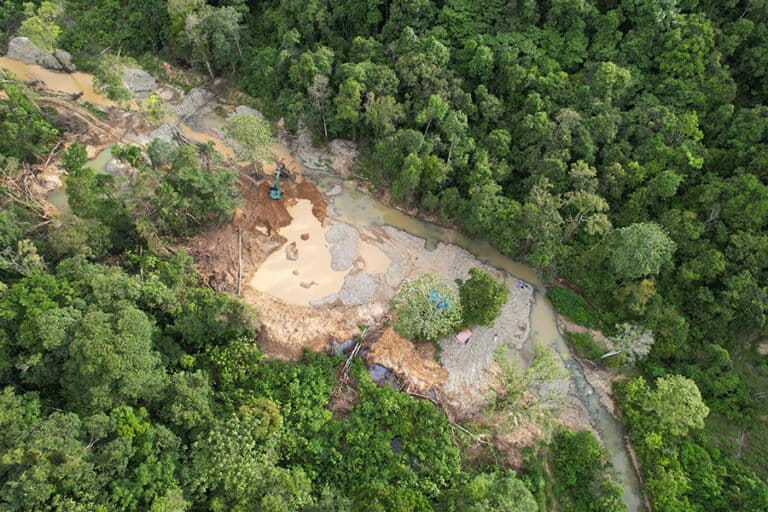
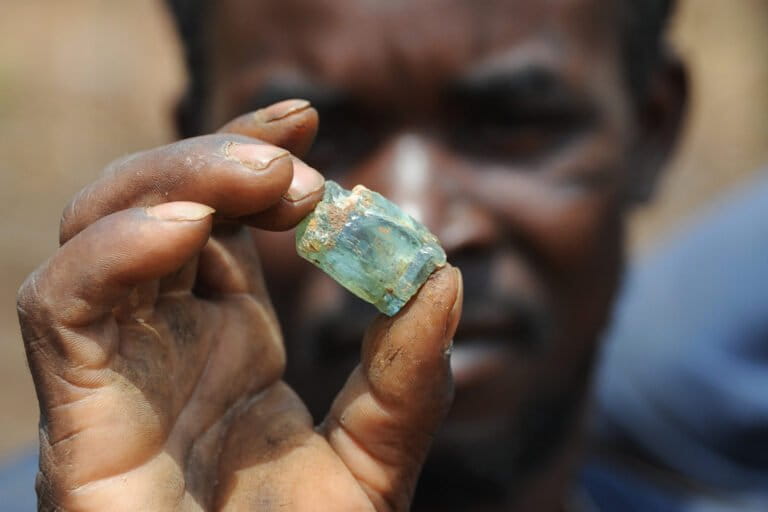
Tanzania cracks down on mining sector, aims for inclusivity and sustainability
Tanzania canceled 40 mining exploration licenses and put another 43 license holders on notice in a crackdown linked to the government’s “Mining for a Brighter Tomorrow” program that aims to create a more “inclusive and sustainable” mining sector. Anthony Mavunde, the minerals minister, told journalists on April 15, in Tanzania’s capital, Dodoma, that the government wanted to restore order in the mining sector, and curb violations of license conditions by mine developers who hoard mining blocks w
0
2
Vodun’s sacred role in saving West Africa’s mangroves
GRAN POPO, Benin — In Benin, mangroves are said to be protected by the Zangbéto. In the Vodun belief, this deity forbids
0
2
From Africa to Central Asia, the European roller’s migration builds relationships
The European roller is a small, striking migratory bird that breeds in open woodlands — or farms and orchards — across E
0
2
New report questions Africa’s oil and gas promise
Fossil fuels have enriched a wealthy few, undermined economic development and left African economies exposed to external
0
2
Alaska wildlife agents can kill bears to protect caribou, judge rules
JUNEAU, Alaska (AP) — A judge says Alaska wildlife agents can resume shooting and killing bears as part of a plan to hel
0
2
Indonesia should avoid controversial programs to fund conservation (commentary)
Protecting nature is still a struggle due to funding gaps that governments across developing countries are struggling to
0
2
Paraguay expanded a reserve in the Gran Chaco. Why is deforestation still rising there?
More than a decade ago, officials in Paraguay expanded a biosphere reserve in the Gran Chaco, hoping to protect more of
0
2
Up to half the bird species using the African-Eurasian flyway are declining
Each year in May, World Migratory Bird Day draws attention to the billions of birds that migrate long distances with the
0
2
Forests, fires and fragile gains: Interview with WRI’s Elizabeth Goldman
According to new data from the World Resources Institute’s Global Forest Watch platform, losses of global tropical prima
0
2
In the Nimba Mountains, a film examines the paradox of mining-funded conservation
For good reason, mining and conservation are typically understood to be activities that exist in opposition to each othe
0
2
Conservationists fear fires could erase years of orangutan habitat recovery
JAKARTA — Fires have burned part of a decade-long orangutan habitat restoration site in Indonesian Borneo, raising fears
0
2
In Mozambique, four isolated mountains yield four new chameleon species
Scientists have identified four new-to-science species of chameleons inhabiting four distinct, isolated mountains in nor
0
2
African elephant genomes reveal ancient mixing — and modern pressures
A continent-wide genomic study of both savanna and forest elephants in Africa has found that African elephants once roam
0
1
‘Hope is rooted in action’: Interview with Jane Goodall’s grandson Merlin Van Lawick
Five months after the passing of conservation icon Jane Goodall in 2025, Mongabay met her grandson, Merlin Van Lawick, a
0
2
Dangerous arsenic levels detected in Thailand’s Mekong mainstream for first time
BANGKOK — Thai authorities have found what they described as dangerous levels of arsenic contamination in sediment from
0
1
What Indigenous youth filmmaking reveals about environmental communication (commentary)
A machete is typically an instrument for clearing dense brush or, in a certain kind of movie, for fending off a terrifyi
0
2
Using songlines, elders codify traditional knowledge to care for Country
LAJAMANU, Australia — A group of Warlpiri men and women gathered along one of the most remote tracks in Australia and st
0
2
Crude oil and wood fires fuel Nigeria’s soot pollution, in photos
Visual storyteller Taiwo Aina-Adeokun traveled across Nigeria over several months from 2025-26, documenting areas of the
0
2
Climate change could erase most South American cloud forests, study warns
Up in the misty mountains, teems a kaleidoscope of life: trees drip with epiphytes, hummingbirds sip from bright blossom
0
1
Vodun’s sacred role in saving West Africa’s mangroves
GRAN POPO, Benin — In Benin, mangroves are said to be protected by the Zangbéto. In the Vodun belief, this deity forbids wood cutting, under penalty of a curse. As a result, in 10 years, more than 500 hectares (1,200 acres) of mangroves have been preserved thanks to this spiritual practice, which protects fragile and vital ecosystems. Increasingly, major international climate bodies — from U.N. climate conferences to IPCC reports — recognize the central role of Indigenous knowledge and tradition
0
2 👁
From Africa to Central Asia, the European roller’s migration builds relationships
The European roller is a small, striking migratory bird that breeds in open woodlands — or farms and orchards — across Europe and Central Asia. Coracias garrulus is also well-known to Southern and South Africa’s avid birdwatching communities, including many citizen scientists who participate in the Southern African Bird Atlas Project. Image courtesy of Lourenço Afonso. But the rollers that spend November to March in South Africa appear to be mostly the C. g. semenowi subspecies. The routes
0
2 👁
New report questions Africa’s oil and gas promise
Fossil fuels have enriched a wealthy few, undermined economic development and left African economies exposed to external shocks, a new report published May 8 in Nairobi, Kenya, argues. Examining 13 oil- and gas-producing African nations, the report concludes that decades of extraction have yielded little benefit for ordinary Africans. “Oil and gas have not and will not deliver development for Africa,” Thuli Makama, Africa director at Oil Change International, said in a press release. “This model
0
2 👁
Alaska wildlife agents can kill bears to protect caribou, judge rules
JUNEAU, Alaska (AP) — A judge says Alaska wildlife agents can resume shooting and killing bears as part of a plan to help recover a herd of caribou that was once an important source of food for Alaska Native hunters. Two conservation groups sought to halt the program while they challenged its legality. They argue the program lacks a scientific basis. But a Superior Court judge says Wednesday the groups had failed to show that the state acted without a reasonable basis for approving the plan. The
0
2 👁
Indonesia should avoid controversial programs to fund conservation (commentary)
Protecting nature is still a struggle due to funding gaps that governments across developing countries are struggling to close. Indonesia is no exception. For instance, its national parks are chronically underfunded, receiving only about $5 per hectare ($2 per acre) per year, far below the estimated needs of around $18/hectare ($7.30/acre) per year. This long-standing shortfall has contributed to ongoing risks of degradation. While various financing innovations are being explored, no long-lastin
0
2 👁
Paraguay expanded a reserve in the Gran Chaco. Why is deforestation still rising there?
More than a decade ago, officials in Paraguay expanded a biosphere reserve in the Gran Chaco, hoping to protect more of the world’s largest tropical dry forest and the Indigenous communities who live there. But a lack of enforcement has left the reserve vulnerable to deforestation caused by agribusiness and cattle ranching, observers say. Approximately 2.78 million hectares (6.87 million acres) were added to Paraguay’s Chaco Biosphere Reserve in 2011, yet the area continues to be one of the coun
0
2 👁
Up to half the bird species using the African-Eurasian flyway are declining
Each year in May, World Migratory Bird Day draws attention to the billions of birds that migrate long distances with the changing of the seasons, a living braid of ecosystems separated by thousands — even tens of thousands — of kilometers. According to Kariuki Ndang’ang’a, BirdLife International Africa’s regional director, about 2 billion birds fly along the African-Eurasian flyway every year: the populations of between 40 and 50 percent of these migratory bird species are in decline. Ndang’ang’
0
2 👁
Forests, fires and fragile gains: Interview with WRI’s Elizabeth Goldman
According to new data from the World Resources Institute’s Global Forest Watch platform, losses of global tropical primary forest loss slowed by 36% in 2025. For scientists, policymakers and environmental groups who track deforestation, this assessment is a welcome note of optimism. “It’s a better year, but it’s just one year,” said Elizabeth Goldman, co-director of GFW. Despite the drop, more than 4.3 million hectares (10.6 million acres) of tropical primary forest — an area larger than Switzer
0
2 👁
In the Nimba Mountains, a film examines the paradox of mining-funded conservation
For good reason, mining and conservation are typically understood to be activities that exist in opposition to each other. But a new film explores how in some landscapes, the two have developed a symbiotic relationship — for better and for worse. Set in northern Liberia’s Nimba mountain range, Overburden examines the historical and ongoing impact of iron ore mining on a “hotspot” habitat for rare and threatened species like western chimpanzees (Pan troglodytes verus). Produced by Gregg Mitman, a
0
2 👁
Conservationists fear fires could erase years of orangutan habitat recovery
JAKARTA — Fires have burned part of a decade-long orangutan habitat restoration site in Indonesian Borneo, raising fears among conservationists that another severe fire season could wipe out years of recovery efforts before the dry season has even fully begun. A decade ago, Yayasan IAR Indonesia (YIARI), the Indonesian affiliate of International Animal Rescue, began restoring degraded orangutan habitat in Pematang Gadung village in Ketapang district, West Kalimantan province, after villagers rep
0
2 👁
In Mozambique, four isolated mountains yield four new chameleon species
Scientists have identified four new-to-science species of chameleons inhabiting four distinct, isolated mountains in northern Mozambique. These mountains — Namuli, Inago, Chiperone, and Ribáuè —are granite inselbergs rising sharply from the arid savanna. They act as “sky islands” or ecological oases that have allowed unique species to evolve in isolation for millions of years. The research team, led by herpetologists Krystal Tolley of the South African National Biodiversity Institute and the Uni
0
2 👁
African elephant genomes reveal ancient mixing — and modern pressures
A continent-wide genomic study of both savanna and forest elephants in Africa has found that African elephants once roamed widely, both species exchanging genes throughout their range. However, as humans decimated elephant populations for their ivory and fragmented their habitats with farms and urban development, the effects of these disturbances appeared in the genomic patterns of both African elephant species. Forest elephants (Loxodonta cyclotis) and savanna elephants (Loxodonta africana) w
0
1 👁
‘Hope is rooted in action’: Interview with Jane Goodall’s grandson Merlin Van Lawick
Five months after the passing of conservation icon Jane Goodall in 2025, Mongabay met her grandson, Merlin Van Lawick, at the ChangeNOW 2026 environmental forum in Paris. It was a first trip to the French capital for Van Lawick, who was born, raised and lives today in Dar es Salaam, Tanzania. He has been connected to the Jane Goodall Institute (JGI), the conservation organization founded by his grandmother, for “as long as he can remember,” he says. Now, working for the institute’s conservation
0
2 👁
Dangerous arsenic levels detected in Thailand’s Mekong mainstream for first time
BANGKOK — Thai authorities have found what they described as dangerous levels of arsenic contamination in sediment from the Mekong River and three of its tributaries in the northern provinces of Chiang Mai and Chiang Rai. Heavy metal pollution has been reported from key tributaries of the Mekong for more than a year now, but the tests conducted in March by Thailand’s Pollution Control Department mark the first time that arsenic contamination has been detected on the mainstream of the Mekong, a v
0
1 👁
What Indigenous youth filmmaking reveals about environmental communication (commentary)
A machete is typically an instrument for clearing dense brush or, in a certain kind of movie, for fending off a terrifying monster. Yet, deep in the Atlantic Forest of Brazil’s Bahia state, I learned that a machete is also used for a much friendlier purpose: slicing green mangoes to eat with salt. That simple, unexpected twist — where anticipated horror dissolves into communal joy — captures exactly what happened when we asked the students in the Indigenous Tupinambá villages of Serra do Padeiro
0
2 👁
Using songlines, elders codify traditional knowledge to care for Country
LAJAMANU, Australia — A group of Warlpiri men and women gathered along one of the most remote tracks in Australia and stared intently at the ground. Here in the Tanami Desert, along the dirt back road between Lajamanu and Tennant Creek, they all agreed that the tracks they could see told a story: A dingo, a black-headed python and a hopping mouse had all passed this way. They argued over the finer points — when exactly the animals had left these signs, whether the python was pursuing the mouse o
0
2 👁
Crude oil and wood fires fuel Nigeria’s soot pollution, in photos
Visual storyteller Taiwo Aina-Adeokun traveled across Nigeria over several months from 2025-26, documenting areas of the country where heavy plumes of smoke, containing the sooty pollutant black carbon, are a part of daily life. In some cases, the soot comes from Nigeria’s smoked-food culinary traditions. In others, it is a byproduct of the country’s oil industry. “I didn’t stay inside the smoke for too long because my eyes were watery and red and I was coughing,” Aina-Adeokun
0
2 👁
Climate change could erase most South American cloud forests, study warns
Up in the misty mountains, teems a kaleidoscope of life: trees drip with epiphytes, hummingbirds sip from bright blossoms, and rare creatures occupy every nook in the cloud forests, which scientists have likened to terrestrial coral reefs. But a new study warns that climate change could strip away the conditions that make cloud forests possible, and in the worst case, erase nearly all of them within 50 years. The research, published in the Journal for Nature Conservation, used machine learning a
0
1 👁
Deforestation and warming could push Amazon to tipping point by 2040s: Study
Deforestation coupled with climate change is rapidly pushing the Amazon Rainforest toward a perilous tipping point that could come much sooner than previously thought. That’s the warning from a new paper, published in Nature, which determined that deforestation of 22-28% of the rainforest, combined with 1.5-1.9° Celsius (2.7-3.4° Fahrenheit) of global warming, could trigger a widespread transformation of the biome as early as the 2040s. Researchers found that crossing this deforestation/global t
0
2 👁
Tanzania cracks down on mining sector, aims for inclusivity and sustainability
Tanzania canceled 40 mining exploration licenses and put another 43 license holders on notice in a crackdown linked to the government’s “Mining for a Brighter Tomorrow” program that aims to create a more “inclusive and sustainable” mining sector. Anthony Mavunde, the minerals minister, told journalists on April 15, in Tanzania’s capital, Dodoma, that the government wanted to restore order in the mining sector, and curb violations of license conditions by mine developers who hoard mining blocks w
0
2 👁
Vodun’s sacred role in saving West Africa’s mangroves
GRAN POPO, Benin — In Benin, mangroves are said to be protected by the Zangbéto. In the Vodun belief, this deity forbids wood cutt…
💬 0
👁 2
From Africa to Central Asia, the European roller’s migration builds relationships
Conservation news · 6d ago
💬 0
👁 2
New report questions Africa’s oil and gas promise
Conservation news · 6d ago
💬 0
👁 2
Alaska wildlife agents can kill bears to protect caribou, judge rules
Conservation news · 6d ago
💬 0
👁 2

Indonesia should avoid controversial programs to fund conservation (commentary)
Conservation news · 6d ago

Paraguay expanded a reserve in the Gran Chaco. Why is deforestation still rising there?
Conservation news · 6d ago

Up to half the bird species using the African-Eurasian flyway are declining
Conservation news · 6d ago

Forests, fires and fragile gains: Interview with WRI’s Elizabeth Goldman
Conservation news · 6d ago
In the Nimba Mountains, a film examines the paradox of mining-funded conservation
For good reason, mining and conservation are typically understood to be activities that exist in opposition to each other. But a n…
💬 0
👁 2
Conservationists fear fires could erase years of orangutan habitat recovery
Conservation news · 6d ago
💬 0
👁 2
In Mozambique, four isolated mountains yield four new chameleon species
Conservation news · May 8, 2026
💬 0
👁 2
African elephant genomes reveal ancient mixing — and modern pressures
Conservation news · May 8, 2026
💬 0
👁 1
‘Hope is rooted in action’: Interview with Jane Goodall’s grandson Merlin Van Lawick
Conservation news · May 8, 2026

Dangerous arsenic levels detected in Thailand’s Mekong mainstream for first time
Conservation news · May 8, 2026

What Indigenous youth filmmaking reveals about environmental communication (commentary)
Conservation news · May 7, 2026

Using songlines, elders codify traditional knowledge to care for Country
Conservation news · May 7, 2026
Crude oil and wood fires fuel Nigeria’s soot pollution, in photos
Visual storyteller Taiwo Aina-Adeokun traveled across Nigeria over several months from 2025-26, documenting areas of the country w…
💬 0
👁 2
Climate change could erase most South American cloud forests, study warns
Conservation news · May 7, 2026
💬 0
👁 1
Deforestation and warming could push Amazon to tipping point by 2040s: Study
Conservation news · May 7, 2026
💬 0
👁 2
Tanzania cracks down on mining sector, aims for inclusivity and sustainability
Conservation news · May 7, 2026
💬 0
👁 2