Latest Articles
Human Identity and Biotechnologies: special issue just published
Alberto Giubilini, Andrew Moeller
In 2024, the TORCH Medical Humanities Hub, in collaboration with the Stanford Boundaries of Humanity project and the Uehiro Oxford Institute, organized a conference on Biotechnology and Human Identity. The conference inspired a special issue of the journal Bioethics edited by the conference co-organizers Alberto Giubilini and Andrew Moeller, which is now published. Here below is the editorial by Alberto and Andrew, and the full special issue is available her
0
1
When Should we Argue?
by Professor Neil Levy; Cross-posted from Blog of the APA
Don’t feed the trolls arguments.
When someone is wrong—on the Internet or in the coffee shop—the temptation to engage can be strong, even though it often seems futile. While it can be satisfying and illuminating to argue with friends and some other people with whom we share some degree of trust, arguments with family members, acquaintances, and Internet strangers seem more often to harden positions and risk undermining the know
0
2
Community Iftar
Blog post by professor Roger Crisp
On 12th March, I was delighted to be invited to attend the 4th Ramadan Community Iftar organized by the Dialogue Society in partnership with The Oxford Academy. The event involved a wonderfully diverse group of participants, including civic leaders, community and faith representatives, charity members, students, academics, parents, and people of all faiths and none.This year’s theme, ‘Building Community Trust’, highlighted the importance of unit
0
10
Some reflections on Elena Conis’ lecture “Contextualising the Modern Era of Vaccination”
By Alberto Giubilini
(Cross-posted from the TORCH Medical Humanities blogpost)
It was a pleasure to host Professor Elena Conis (UC Berkeley) to deliver the inaugural lecture of the Medical Humanities program “Immunity and the Humanities”, supported by the Uehiro Oxford Institute.
Elena Conis is one of the most prominent historians of medicine and the author, among other things, of Vaccine Nation. America’s Changing Relationship with Immunization (U
0
3
Can Pornography be Feminist in a Mass Market Economy?
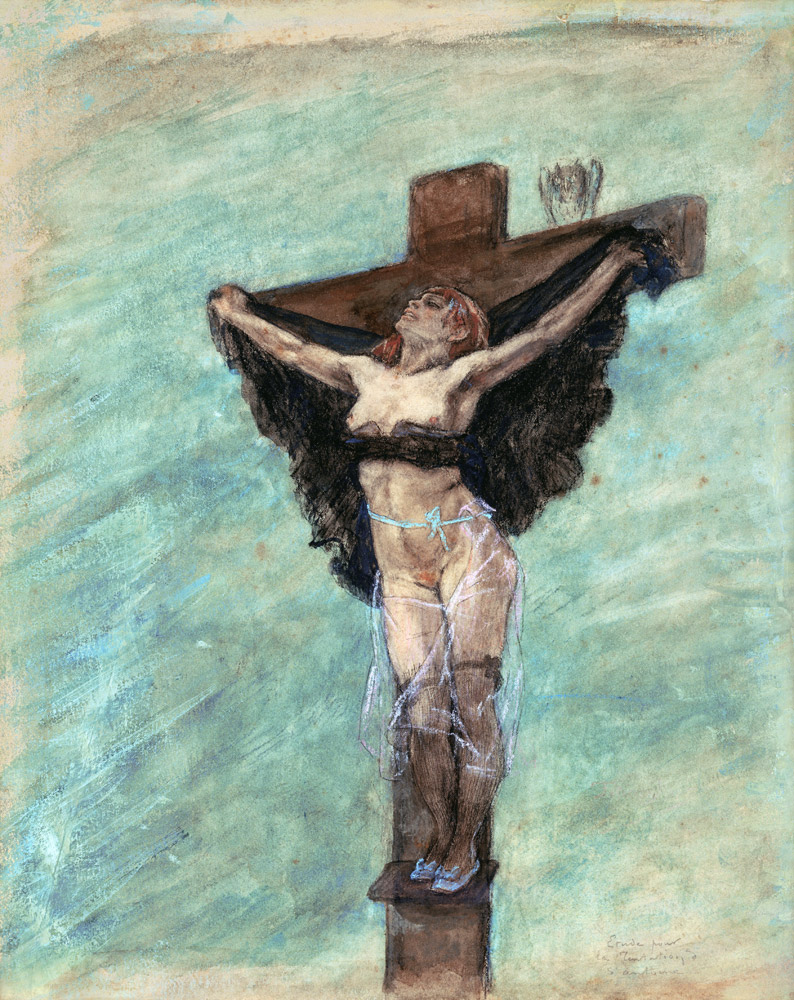
Artist: Felicien Rops (1833 – 1898)
Undergraduate Highly Commended paper in the 2026 National Uehiro Oxford Essay Prize in Practical Ethics. By Leela Kainth.
Mainstream pornography refers to conventional, mass-marketed, sexually explicit material produced at commercial scale, typically for consumers to masturbate to. This is distinct from so-called ‘feminist pornography’, which self-consciously aims to resist these norms through alternative representations and focus on production et
0
3
Is Prostitution Just a Job?
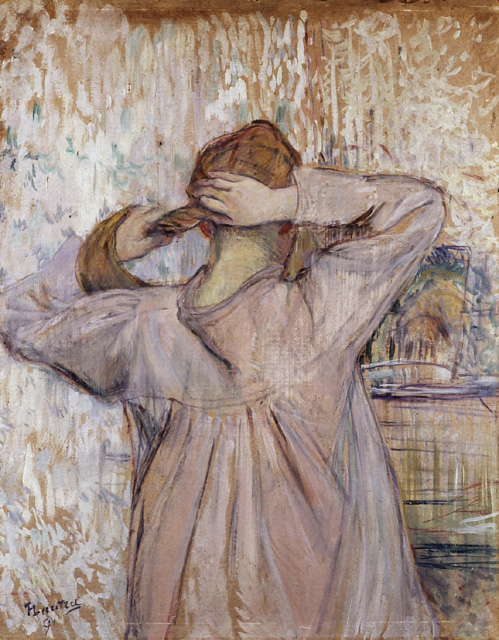
Combing (1981) by Henri de Toulouse-Lautrec Photo: Ashmolean Museum
Undergraduate Finalist paper in the 2026 National Uehiro Oxford Essay Prize in Practical Ethics. By Ethan Beri.
Introduction
Despite being the “oldest profession”, prostitution is still hotly debated, both in the academy and in public discourse. Prostitution is often considered worse than other jobs, in part because it wrongs the prostitute: a woman who sells sex “sells herself”, or appears to consent to something w
0
3
‘It’s Physical, Not Intellectual’: The Ethics of Correcting Assumptions About Disability
Photo by James Forsdyke.
Graduate Highly Commended paper in the 2026 National Uehiro Oxford Essay Prize in Practical Ethics. By James Forsdyke. ORCID: https://orcid.org/0009-0008-2446-4586 In this paper, I will discuss ethical considerations when it comes to correcting assumptions about people with physical disabilities. In particular, I will discuss the assumption some individuals make that physical disabilities are necessarily accompanied by cognitive or intellectual ones. People with ph
0
6
New Book: Protecting Minds – The Right Against Mental Interference
If your doctor injects you with a vaccine without your consent, or a stranger strokes the back of your neck on a packed train, we would think that they have wronged you, morally speaking. And we might capture this wrong by saying that they have trespassed on your body or infringed your right against bodily interference. By contrast, if a computer game designer uses loot boxes to boost your desire to keep playing a game, or a video platform uses subliminal imagery to create positive associations
0
7
Rethinking the Ethics and Politics of the Global Campaign Against Female Genital Cutting
Reflections on a recent Antitheses Project conversation
In a recent ANTITHESES Project podcast, Dominic Wilkinson (Uehiro Oxford Institute), Brian D. Earp (National University of Singapore), and Zainab Nur (Hidden Voices UK) discuss an extended essay published in the Journal of Medical Ethics (2025) examining the unintended harms of the dominant global campaign against female genital cutting (FGC), often referred to as “female genital mutilation” (FGM). The conversation situates the article w
0
2
Mental Health Chatbots: on Truth and Bullshit
By Dr Jeremy Gauntlett-Gilbert; Consultant Psychologist and student, MSt Practical Ethics
Chatbots are increasingly being used to deliver an AI version of psychological therapy. Internationally, there is pressure on mental health services and a shortage of human therapists. Mental health providers have a keen interest in such AI technological solutions that might offer treatment “at volume” at low cost. Several tech companies have received, formal ‘healthcare device’ approval for their AI the
0
6
A Visit to the Bentham Project at University College London (UCL)
By Taka Kurogi, Bruno dos Santos Queiroz
We were pleased to be welcomed at the Bentham Project by Drs. Isra Black and Tim Causer of UCL’s Faculty of Laws. It was deeply inspiring to learn more about the Project’s ongoing work and its central role in preserving, studying, and, most importantly, making publicly accessible the writings of Jeremy Bentham, whom we also had the great pleasure of “meeting” there.
Born on February 15, 1748, Bentham was a philosopher who has been and will always be
0
5
Helping Museums Think About The Ethics of Cultural Restitution: Introducing The Decision Aid for the Restitution of Cultural Artefacts (DARCA)
In recent years, museums and other cultural institutions are increasingly being asked whether they have a moral responsibility to return objects in their collections to countries, communities, families, or individuals who claim a connection to them. These debates about cultural restitution and repatriation have become increasingly visible, involving discussion of artefacts with complex histories. High-profile cases such as the Parthenon Marbles, the Rosetta Stone, and the Benin Bronzes have draw
0
3
The MSt in Practical Ethics at Oxford University – Apply Before January 28!
Join this year’s cohort of MSt in Practical Ethics students – apply by 28th January to take advantage of funding opportunities.
The MSt in Practical Ethics at the University of Oxford is designed for those who want to think carefully and rigorously about important ethical questions, while remaining firmly engaged with the real world.
Ethics, Practically Understood
The course offers high-quality, part-time training in practical ethics, combining philosophical depth with real-world
0
3
Celebrating Women in Ethics #WiE
The academic study of ethics is full of ideas that shape how we think about the world, and many of them come from women whose work deserves to be better known. Women writers, thinkers and ethicists have contributed for millennia alongside their male counterparts, yet their work has been often forgotten or side-lined.
In our new series of reels #WomeninEthics, a collaboration between the Department of Social Ethics at the University of Bonn and the Uehiro Oxford Institute at the Universi
0
3
Human Identity and Biotechnologies: special issue just published
Alberto Giubilini, Andrew Moeller
In 2024, the TORCH Medical Humanities Hub, in collaboration with the Stanford Bound
0
1
When Should we Argue?
by Professor Neil Levy; Cross-posted from Blog of the APA
Don’t feed the trolls arguments.
When someone is wrong—o
0
2
Community Iftar
Blog post by professor Roger Crisp
On 12th March, I was delighted to be invited to attend the 4th Ramadan Community
0
10
Some reflections on Elena Conis’ lecture “Contextualising the Modern Era of Vaccination”
By Alberto Giubilini
(Cross-posted from the TORCH Medical Humanities blogpost)
It was a pleasure to host
0
3
Can Pornography be Feminist in a Mass Market Economy?
Artist: Felicien Rops (1833 – 1898)
Undergraduate Highly Commended paper in the 2026 National Uehiro Oxford Ess
0
3
Is Prostitution Just a Job?
Combing (1981) by Henri de Toulouse-Lautrec Photo: Ashmolean Museum
Undergraduate Finalist paper in the 2026 Nationa
0
3
‘It’s Physical, Not Intellectual’: The Ethics of Correcting Assumptions About Disability
Photo by James Forsdyke.
Graduate Highly Commended paper in the 2026 National Uehiro Oxford Essay Prize in Practical
0
6
New Book: Protecting Minds – The Right Against Mental Interference
If your doctor injects you with a vaccine without your consent, or a stranger strokes the back of your neck on a packed
0
7
Rethinking the Ethics and Politics of the Global Campaign Against Female Genital Cutting
Reflections on a recent Antitheses Project conversation
In a recent ANTITHESES Project podcast, Dominic Wilkinson (Ue
0
2
Mental Health Chatbots: on Truth and Bullshit
By Dr Jeremy Gauntlett-Gilbert; Consultant Psychologist and student, MSt Practical Ethics
Chatbots are increasingly b
0
6
A Visit to the Bentham Project at University College London (UCL)
By Taka Kurogi, Bruno dos Santos Queiroz
We were pleased to be welcomed at the Bentham Project by Drs. Isra Black and
0
5
Helping Museums Think About The Ethics of Cultural Restitution: Introducing The Decision Aid for the Restitution of Cultural Artefacts (DARCA)
In recent years, museums and other cultural institutions are increasingly being asked whether they have a moral responsi
0
3
Human Identity and Biotechnologies: special issue just published
Alberto Giubilini, Andrew Moeller
In 2024, the TORCH Medical Humanities Hub, in collaboration with the Stanford Boundaries of Humanity project and the Uehiro Oxford Institute, organized a conference on Biotechnology and Human Identity. The conference inspired a special issue of the journal Bioethics edited by the conference co-organizers Alberto Giubilini and Andrew Moeller, which is now published. Here below is the editorial by Alberto and Andrew, and the full special issue is available her
0
1 👁
When Should we Argue?
by Professor Neil Levy; Cross-posted from Blog of the APA
Don’t feed the trolls arguments.
When someone is wrong—on the Internet or in the coffee shop—the temptation to engage can be strong, even though it often seems futile. While it can be satisfying and illuminating to argue with friends and some other people with whom we share some degree of trust, arguments with family members, acquaintances, and Internet strangers seem more often to harden positions and risk undermining the know
0
2 👁
Community Iftar
Blog post by professor Roger Crisp
On 12th March, I was delighted to be invited to attend the 4th Ramadan Community Iftar organized by the Dialogue Society in partnership with The Oxford Academy. The event involved a wonderfully diverse group of participants, including civic leaders, community and faith representatives, charity members, students, academics, parents, and people of all faiths and none.This year’s theme, ‘Building Community Trust’, highlighted the importance of unit
0
10 👁
Some reflections on Elena Conis’ lecture “Contextualising the Modern Era of Vaccination”
By Alberto Giubilini
(Cross-posted from the TORCH Medical Humanities blogpost)
It was a pleasure to host Professor Elena Conis (UC Berkeley) to deliver the inaugural lecture of the Medical Humanities program “Immunity and the Humanities”, supported by the Uehiro Oxford Institute.
Elena Conis is one of the most prominent historians of medicine and the author, among other things, of Vaccine Nation. America’s Changing Relationship with Immunization (U
0
3 👁
Can Pornography be Feminist in a Mass Market Economy?
Artist: Felicien Rops (1833 – 1898)
Undergraduate Highly Commended paper in the 2026 National Uehiro Oxford Essay Prize in Practical Ethics. By Leela Kainth.
Mainstream pornography refers to conventional, mass-marketed, sexually explicit material produced at commercial scale, typically for consumers to masturbate to. This is distinct from so-called ‘feminist pornography’, which self-consciously aims to resist these norms through alternative representations and focus on production et
0
3 👁
Is Prostitution Just a Job?
Combing (1981) by Henri de Toulouse-Lautrec Photo: Ashmolean Museum
Undergraduate Finalist paper in the 2026 National Uehiro Oxford Essay Prize in Practical Ethics. By Ethan Beri.
Introduction
Despite being the “oldest profession”, prostitution is still hotly debated, both in the academy and in public discourse. Prostitution is often considered worse than other jobs, in part because it wrongs the prostitute: a woman who sells sex “sells herself”, or appears to consent to something w
0
3 👁
‘It’s Physical, Not Intellectual’: The Ethics of Correcting Assumptions About Disability
Photo by James Forsdyke.
Graduate Highly Commended paper in the 2026 National Uehiro Oxford Essay Prize in Practical Ethics. By James Forsdyke. ORCID: https://orcid.org/0009-0008-2446-4586 In this paper, I will discuss ethical considerations when it comes to correcting assumptions about people with physical disabilities. In particular, I will discuss the assumption some individuals make that physical disabilities are necessarily accompanied by cognitive or intellectual ones. People with ph
0
6 👁
New Book: Protecting Minds – The Right Against Mental Interference
If your doctor injects you with a vaccine without your consent, or a stranger strokes the back of your neck on a packed train, we would think that they have wronged you, morally speaking. And we might capture this wrong by saying that they have trespassed on your body or infringed your right against bodily interference. By contrast, if a computer game designer uses loot boxes to boost your desire to keep playing a game, or a video platform uses subliminal imagery to create positive associations
0
7 👁
Rethinking the Ethics and Politics of the Global Campaign Against Female Genital Cutting
Reflections on a recent Antitheses Project conversation
In a recent ANTITHESES Project podcast, Dominic Wilkinson (Uehiro Oxford Institute), Brian D. Earp (National University of Singapore), and Zainab Nur (Hidden Voices UK) discuss an extended essay published in the Journal of Medical Ethics (2025) examining the unintended harms of the dominant global campaign against female genital cutting (FGC), often referred to as “female genital mutilation” (FGM). The conversation situates the article w
0
2 👁
Mental Health Chatbots: on Truth and Bullshit
By Dr Jeremy Gauntlett-Gilbert; Consultant Psychologist and student, MSt Practical Ethics
Chatbots are increasingly being used to deliver an AI version of psychological therapy. Internationally, there is pressure on mental health services and a shortage of human therapists. Mental health providers have a keen interest in such AI technological solutions that might offer treatment “at volume” at low cost. Several tech companies have received, formal ‘healthcare device’ approval for their AI the
0
6 👁
A Visit to the Bentham Project at University College London (UCL)
By Taka Kurogi, Bruno dos Santos Queiroz
We were pleased to be welcomed at the Bentham Project by Drs. Isra Black and Tim Causer of UCL’s Faculty of Laws. It was deeply inspiring to learn more about the Project’s ongoing work and its central role in preserving, studying, and, most importantly, making publicly accessible the writings of Jeremy Bentham, whom we also had the great pleasure of “meeting” there.
Born on February 15, 1748, Bentham was a philosopher who has been and will always be
0
5 👁
Helping Museums Think About The Ethics of Cultural Restitution: Introducing The Decision Aid for the Restitution of Cultural Artefacts (DARCA)
In recent years, museums and other cultural institutions are increasingly being asked whether they have a moral responsibility to return objects in their collections to countries, communities, families, or individuals who claim a connection to them. These debates about cultural restitution and repatriation have become increasingly visible, involving discussion of artefacts with complex histories. High-profile cases such as the Parthenon Marbles, the Rosetta Stone, and the Benin Bronzes have draw
0
3 👁
The MSt in Practical Ethics at Oxford University – Apply Before January 28!
Join this year’s cohort of MSt in Practical Ethics students – apply by 28th January to take advantage of funding opportunities.
The MSt in Practical Ethics at the University of Oxford is designed for those who want to think carefully and rigorously about important ethical questions, while remaining firmly engaged with the real world.
Ethics, Practically Understood
The course offers high-quality, part-time training in practical ethics, combining philosophical depth with real-world
0
3 👁
Celebrating Women in Ethics #WiE
The academic study of ethics is full of ideas that shape how we think about the world, and many of them come from women whose work deserves to be better known. Women writers, thinkers and ethicists have contributed for millennia alongside their male counterparts, yet their work has been often forgotten or side-lined.
In our new series of reels #WomeninEthics, a collaboration between the Department of Social Ethics at the University of Bonn and the Uehiro Oxford Institute at the Universi
0
3 👁
Human Identity and Biotechnologies: special issue just published
Alberto Giubilini, Andrew Moeller
In 2024, the TORCH Medical Humanities Hub, in collaboration with the Stanford Boundaries of H…
💬 0
👁 1
When Should we Argue?
Practical Ethics · May 5, 2026
💬 0
👁 2
Community Iftar
Practical Ethics · Apr 6, 2026
💬 0
👁 10
Some reflections on Elena Conis’ lecture “Contextualising the Modern Era of Vaccination”
Practical Ethics · Apr 1, 2026
💬 0
👁 3

Can Pornography be Feminist in a Mass Market Economy?
Practical Ethics · Mar 2, 2026

Is Prostitution Just a Job?
Practical Ethics · Mar 2, 2026

‘It’s Physical, Not Intellectual’: The Ethics of Correcting Assumptions About Disability
Practical Ethics · Feb 27, 2026
New Book: Protecting Minds – The Right Against Mental Interference
Practical Ethics · Feb 20, 2026
Rethinking the Ethics and Politics of the Global Campaign Against Female Genital Cutting
Reflections on a recent Antitheses Project conversation
In a recent ANTITHESES Project podcast, Dominic Wilkinson (Uehiro Oxfor…
💬 0
👁 2
Mental Health Chatbots: on Truth and Bullshit
Practical Ethics · Feb 16, 2026
💬 0
👁 6
A Visit to the Bentham Project at University College London (UCL)
Practical Ethics · Feb 6, 2026
💬 0
👁 5
Helping Museums Think About The Ethics of Cultural Restitution: Introducing The Decision Aid for the Restitution of Cultural Artefacts (DARCA)
Practical Ethics · Jan 26, 2026
💬 0
👁 3
…
online
0